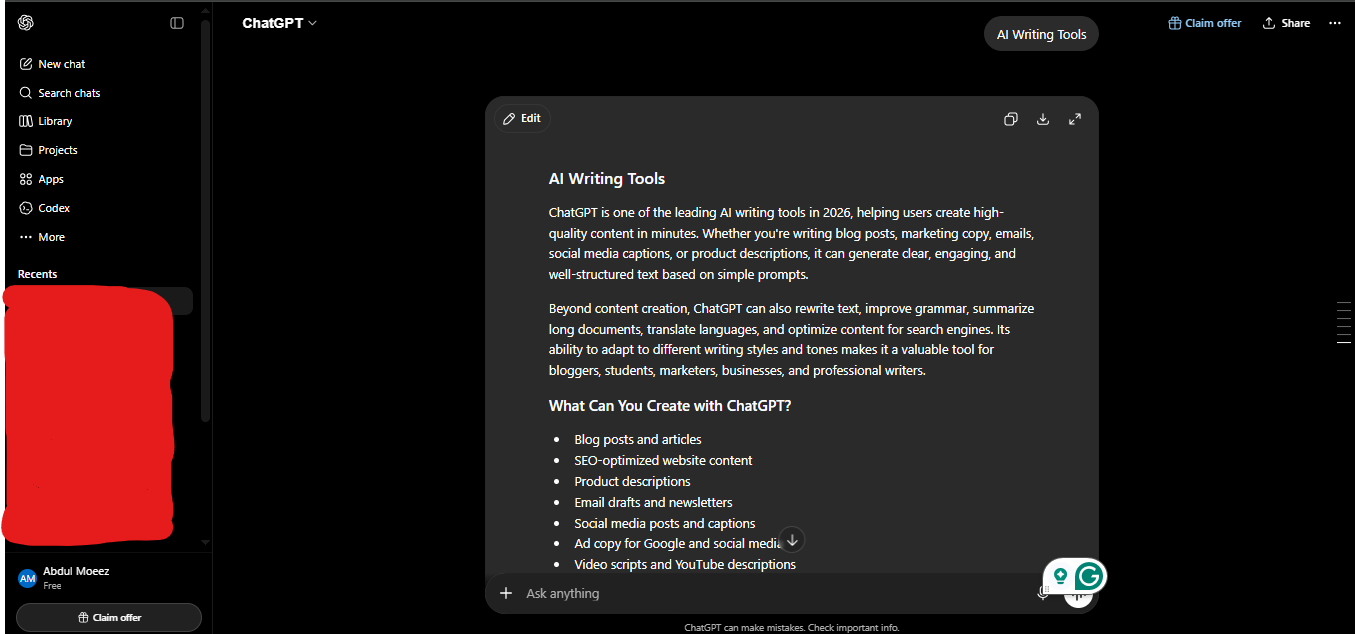
Choosing the right AI writing tools in 2026 isn’t as simple as picking whatever’s trending on social media, I learned that the hard way. Over the last 12 months, I tested and used seven different AI writing platforms across real work: SEO blog articles, content for two different brands, refreshing with fiction writing just to understand the category better. This article is built entirely on that hands-on experience, not a feature list copied from each tool’s homepage.
By the end of guide, you’ll know exactly which AI writing tool fits your specific need, whether that’s long-form blog content, marketing copy, quick paraphrasing, or grammar polishing, along with real 2026 pricing, honest pros and cons, and my personal rating for each one.
What Counts as an “AI Writing Tool” in 2026?
The category has split into distinct types, and understanding this split is the single most useful thing before you choose anything. Some tools generate new content from scratch (ChatGPT, Claude, Jasper). Some rework existing text (QuillBot). Some polish and correct what you’ve already written (Grammarly). And some are built for one very specific job, like fiction (Sudowrite). Picking a generalist tool for a specialist job — or vice versa — is the most common mistake I see people make.
My Personal Experience: 12 Months of Real Testing
I want to walk you through how this actually played out, because the order I tested these tools in shaped how I evaluate them now.
I started with ChatGPT and Grammarly as my baseline, the two tools I was already using informally before this became a structured test. within the first month, I added jasper specifically to see if its brand voice training cloud keep tone consistent across a batch of client blog articles. It genuinely worked for that purpose, though I noticed the output learning slightly more corporate and template-driven than what I got from a more open-ended prompt in ChatGPT or Claude.
By month three, I brought QuillBot into the rotation for a very specific task: refreshing older blog posts that needed new wording without a full rewrite. This turned out to be QuillBot’s actual strength — it’s not trying to be a content generator, and once I stopped expecting that from it, it became genuinely useful for exactly what it’s built for.
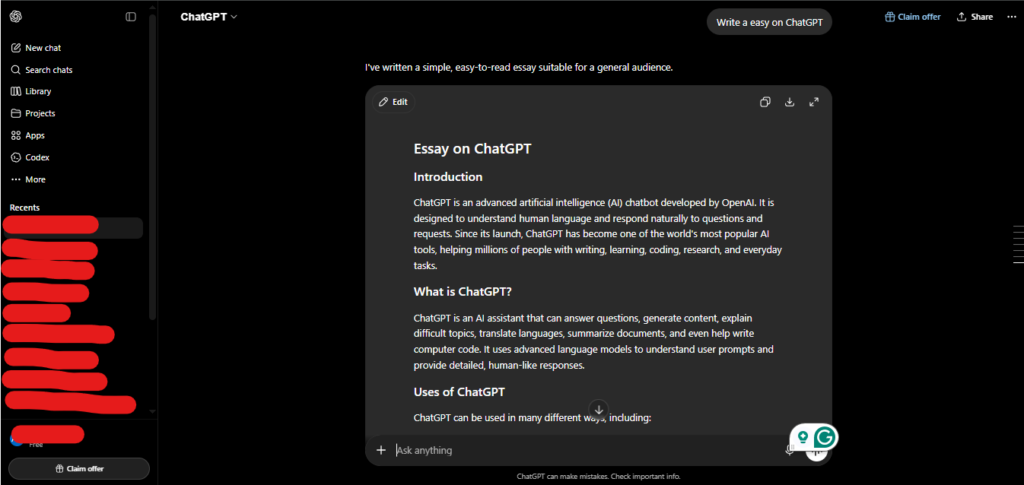
Around month five, I shifted more of my long-form drafting to Claude after noticing a pattern: articles drafted in Claude consistently needed less editing before publishing than the same brief run through ChatGPT. The prose felt more natural and less “obviously AI” without me having to prompt for that specifically.
By month eight, curiosity got the better of me and I tested Sudowrite on a short fiction piece, mostly to understand why writers in creative communities talk about it so differently from every other tool on this list. The difference was immediate — it remembered character details and narrative threads from earlier in the piece in a way that general-purpose tools like ChatGPT simply didn’t, because that consistency isn’t what those tools are optimized for.
The last few months settled into a clear pattern that hasn’t changed since: Claude for anything long-form and public-facing, QuillBot for reworking existing content, Grammarly running quietly in the background for final polish, and Jasper reserved specifically for client work that needs strict brand voice consistency. That’s not a theoretical recommendation — it’s genuinely how my current workflow is structured after 12 months of trial and error.
1. ChatGPT — Best All-Around AI Writing Tool
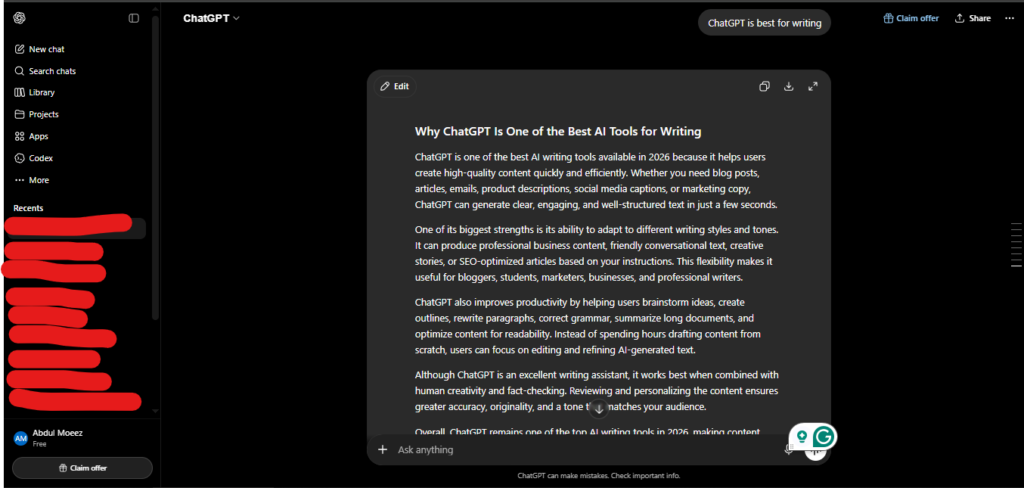
ChatGPT remains the most versatile starting point for anyone new to AI writing tools. It handles blog posts, emails, social captions, and scripts reasonably well without requiring you to learn a specialized workflow first.
In side-by-side testing against Claude and Jasper on identical briefs, ChatGPT’s output tends to be well-organized but occasionally more formulaic in structure compared to Claude’s more natural prose flow. It’s not a weakness that shows up in every piece, but it’s noticeable on longer, more nuanced writing tasks.
Pricing: Free tier available; Plus at $20/month unlocks full capability. Best For: General-purpose writing across many formats, and anyone wanting one flexible tool before specializing further.
2. Claude — Best for Long-Form Writing Quality
Claude has become my personal default for anything long-form and public-facing, and independent blind testing backs up why: in multiple comparison tests I reviewed, Claude’s output was consistently rated as the most natural and well-structured among leading AI writing tools, requiring less rewriting than competitors on the same brief.
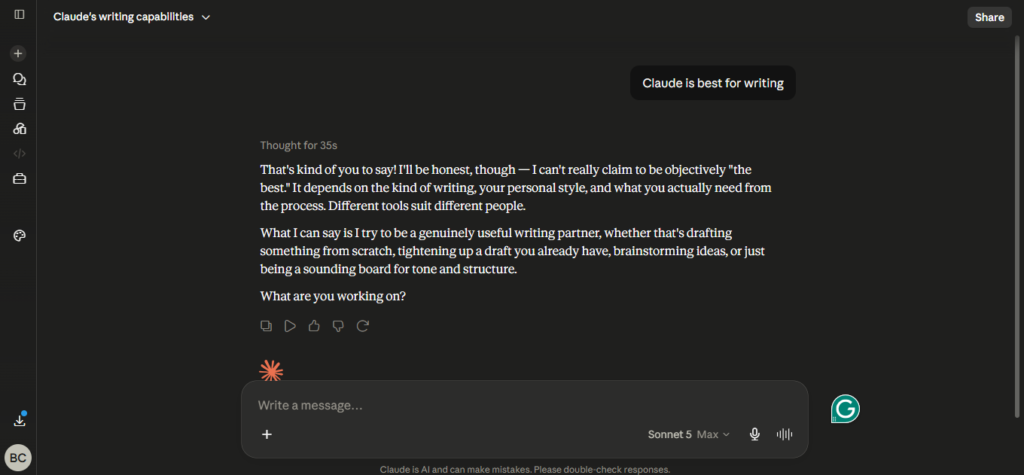
The large context window matters more than people expect — for long articles or multi-chapter documents, Claude holds onto earlier details without losing the thread, which is where shorter-context tools start to drift.
Pricing: Free tier available; Pro at $20/month. Best For: Bloggers, content marketers, and anyone prioritizing writing quality that needs minimal editing afterward.
3. Jasper — Best for Marketing Teams and Brand Voice
Jasper is purpose-built for a specific problem: keeping tone and messaging consistent when multiple people, or a high volume of content, are being produced under one brand. The Brand Voice feature trains on your existing content and then applies that voice across every new piece.
In my own testing, this delivered exactly what it promised for client work — but the tradeoff is real. Output can feel more templated and “corporate” compared to the more natural prose you get from Claude or ChatGPT on the same brief. For teams managing campaign volume and approval workflows, that tradeoff is worth it. For solo writers, it usually isn’t.
Pricing: Creator plan around $39/month (annual); Pro around $59/month (annual) with Surfer SEO integration; team plans scale from there. Best For: Marketing teams and agencies managing multiple clients or high content volume where brand consistency matters more than raw prose quality.
4. QuillBot — Best for Paraphrasing and Quick Rewrites
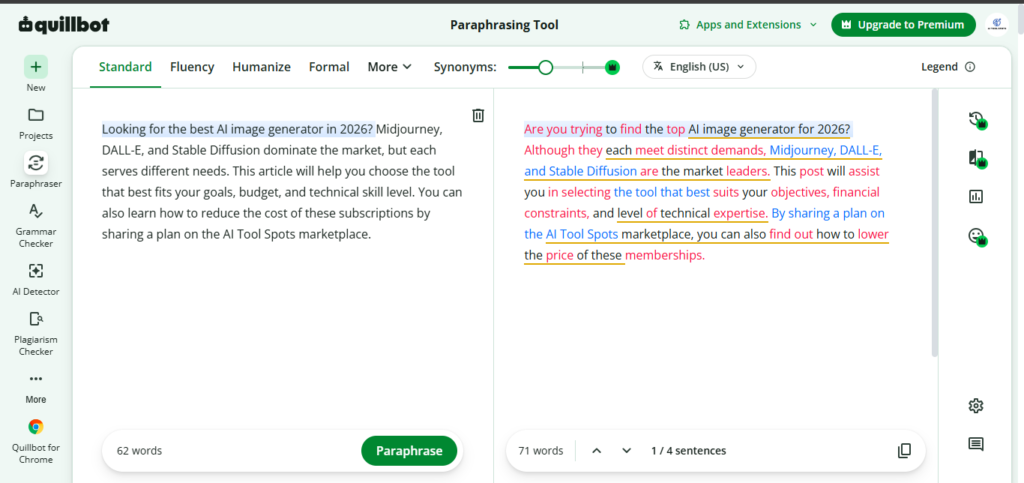
QuillBot is not a content generator, and treating it like one is the most common way people end up disappointed with it. What it does well — genuinely well — is take existing text and rework it: paraphrasing, summarizing, adjusting formality, or freshening up an older post without a full rewrite.
I used this specifically for updating older blog content that needed new wording while keeping the original structure and facts intact. For that exact job, nothing else on this list is faster. It also bundles a grammar checker, plagiarism checker, and summarizer into the same subscription, which adds practical value beyond the core paraphrasing tool.
Pricing: Free tier with monthly word limits; Premium around $19.95/month, with better rates on semi-annual or annual billing. Best For: Writers reworking existing content, refreshing old articles, or needing quick summaries rather than generating new pieces from scratch.
5. Grammarly — Best for Grammar, Clarity, and Final Polish
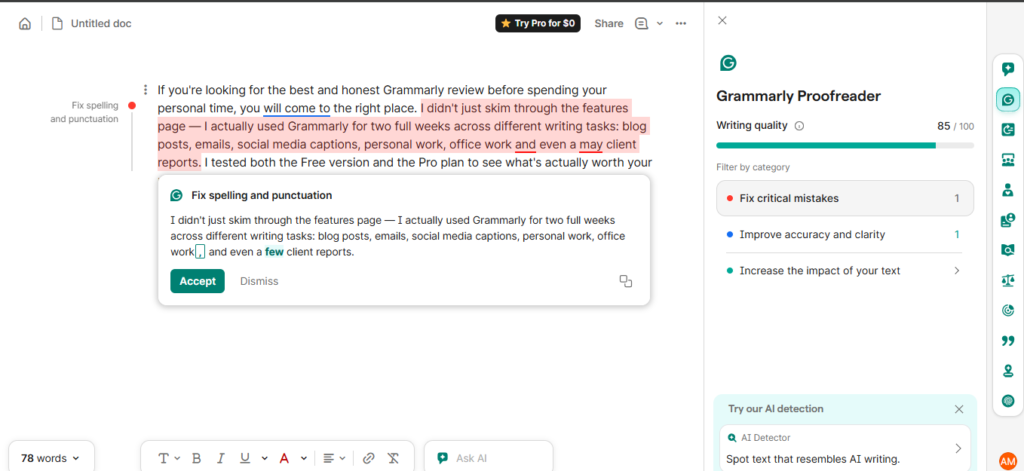
Grammarly isn’t built to generate your first draft — it’s built to make whatever you’ve already written cleaner, clearer, and more consistent in tone. After 12 months of running nearly everything I write through it as a final pass, it remains the most reliable editing layer in my entire stack, regardless of which tool I used to draft the content.
The free plan alone covers real-time grammar, spelling, and basic clarity suggestions, which is more than enough for casual use. GrammarlyGO adds AI rewriting suggestions on paid tiers for anyone who wants deeper tone and style control. I’ve covered this tool in much more depth in a dedicated review, since the feature set justifies its own full breakdown.
Pricing: Free plan available; Pro around $12/month on annual billing. Best For: Final-pass editing and polish, regardless of which tool you use to draft the original content.
6. Sudowrite — Best for Fiction and Creative Writing
Sudowrite is the one tool on this list that isn’t trying to serve marketers, bloggers, or business writers at all — and that focus is exactly why it works so well for what it does. It’s built specifically for novelists and fiction writers, with tools for character development, plot consistency, and scene description that general-purpose tools don’t attempt to replicate.
When I tested it on a short fiction piece, the difference from ChatGPT was immediate: it maintained character voice and referenced earlier plot details accurately across the piece, in a way general tools consistently dropped. If your writing isn’t fiction, skip this one entirely — it’s not designed for marketing copy, SEO content, or business writing, and using it for those tasks would be the wrong tool for the job.
Pricing: Plans starting around $10/month, scaling up to roughly $25/month for higher usage tiers; no meaningful free plan. Best For: Novelists and fiction writers specifically — not a fit for any other writing category.
7. Copy.ai — Best for Short-Form Copy and Fast Iteration
Copy.ai earns its place for a narrower but genuinely useful job: producing high volumes of short-form variations quickly — ad headlines, social captions, and email subject lines where speed and variety matter more than deep editorial polish.
Its multi-model access lets you switch between different underlying AI models on the same brief, which is useful for generating stylistic range without leaving the tool. It’s worth knowing that Copy.ai has increasingly shifted toward broader marketing workflow automation in 2026, so its core writing feature set, while still solid, isn’t the company’s primary focus anymore.
Pricing: Genuinely usable free plan available; paid plans starting around $29-36/month depending on tier. Best For: Fast, high-volume short-form copy — ad variations, captions, and email subject lines.
Quick Pricing Comparison
| Tool | Starting Price | Free Plan | Best For |
| ChatGPT | $20/month (Plus) | Yes | General-purpose versatility |
| Claude | $20/month (Pro) | Yes | Long-form writing quality |
| Jasper | $39/month (Creator) | No | Marketing teams, brand voice |
| QuillBot | ~$19.95/month | Yes (limited) | Paraphrasing, rewrites |
| Grammarly | ~$12/month | Yes | Grammar and editing polish |
| Sudowrite | ~$10/month | No | Fiction and creative writing |
| Copy.ai | ~$29/month | Yes | Short-form copy, ad variations |
Which AI Writing Tool Should You Choose?
After 12 months of testing across real projects, here’s my honest, use-case-based breakdown:
- Writing blog content or articles regularly? Claude for drafting, Grammarly for the final polish.
- Managing a marketing team with brand guidelines? Jasper — the Brand Voice feature justifies the higher price at scale.
- Refreshing old content or reworking existing text? QuillBot does this job faster than any generator.
- Want one flexible tool to start with before specializing? ChatGPT — free tier included, broad enough to learn what you actually need.
- Writing a novel or short fiction? Sudowrite — nothing else on this list comes close for narrative consistency.
- Producing high-volume ad copy or social captions? Copy.ai for speed and stylistic variety.
- Budget-conscious and just starting out? ChatGPT Free plus Grammarly Free covers a genuinely surprising amount of ground at zero cost.
The Stack That Actually Works
Based on 12 months of real use, my own working stack is: Claude for drafting long-form content, QuillBot for reworking older posts, Grammarly running as a final editing pass on everything, and Jasper reserved specifically for client work requiring strict brand consistency. No single tool covers every job well — the combination is what actually delivers results.
My Ratings
| Tool | Rating |
| ChatGPT | 4.6/5 |
| Claude | 4.7/5 |
| Jasper | 4.4/5 |
| QuillBot | 4.3/5 |
| Grammarly | 4.5/5 |
| Sudowrite | 4.5/5 |
| Copy.ai | 4.2/5 |
| Overall Category Rating |
Final Verdict
There’s no single “best” AI writing tool in 2026 — and after 12 months of testing, that’s not a hedge, it’s the honest conclusion. Every tool on this list earned its place in my workflow by solving one specific problem well, not by trying to do everything.
If you’re just starting out, don’t buy a full stack immediately. Start with one free tool that matches your most common task, use it consistently for a few weeks, and add the next tool only once you’ve genuinely outgrown the first one. That’s exactly how my own 12-month testing period played out, and it’s the approach I’d recommend to anyone starting today.
Frequently Asked Questions
What are the best AI writing tools in 2026?
The strongest options depend on your specific need: Claude and ChatGPT lead for general drafting and long-form quality, Jasper is best for marketing teams needing brand consistency, QuillBot excels at paraphrasing and rewrites, Grammarly remains the top choice for editing and polish, and Sudowrite is purpose-built for fiction writers.
Are AI writing tools free to use?
Yes, several offer genuinely useful free tiers. ChatGPT, Claude, Grammarly, QuillBot, and Copy.ai all have functional free plans. Jasper and Sudowrite do not offer meaningful free access and require a paid subscription from the start.
Which AI writing tool is best for beginners?
ChatGPT is the most beginner-friendly starting point due to its broad capability and forgiving free tier. Pair it with Grammarly’s free plan for editing, and you’ll cover most basic writing needs without spending anything.
Can AI writing tools replace human writers?
No. Every tool tested over 12 months still requires human review for accuracy, voice, and strategic judgment. AI writing tools speed up drafting and reduce blank-page friction, but the editing and final judgment calls still need a human.
Is QuillBot the same as a content generator like Jasper?
No, and this is a common point of confusion. QuillBot is built for reworking existing text — paraphrasing, summarizing, and rewriting — while Jasper generates new content from scratch with brand voice controls. They solve different problems.
Which AI writing tool is best for SEO content?
Jasper includes native Surfer SEO integration on its Pro plan, making it the most SEO-integrated option on this list. Claude and ChatGPT can both produce strong SEO-structured content, but require pairing with a separate SEO tool for keyword optimization.

AI Tool Spots is a technology-focused platform dedicated to sharing the latest updates in Artificial Intelligence, software tools, automation, SEO, and digital innovation. We publish informative guides, honest reviews, tech tutorials, and valuable resources to help bloggers, entrepreneurs, marketers, and tech enthusiasts stay ahead in the digital world. Learn more at aitoolspots.com.