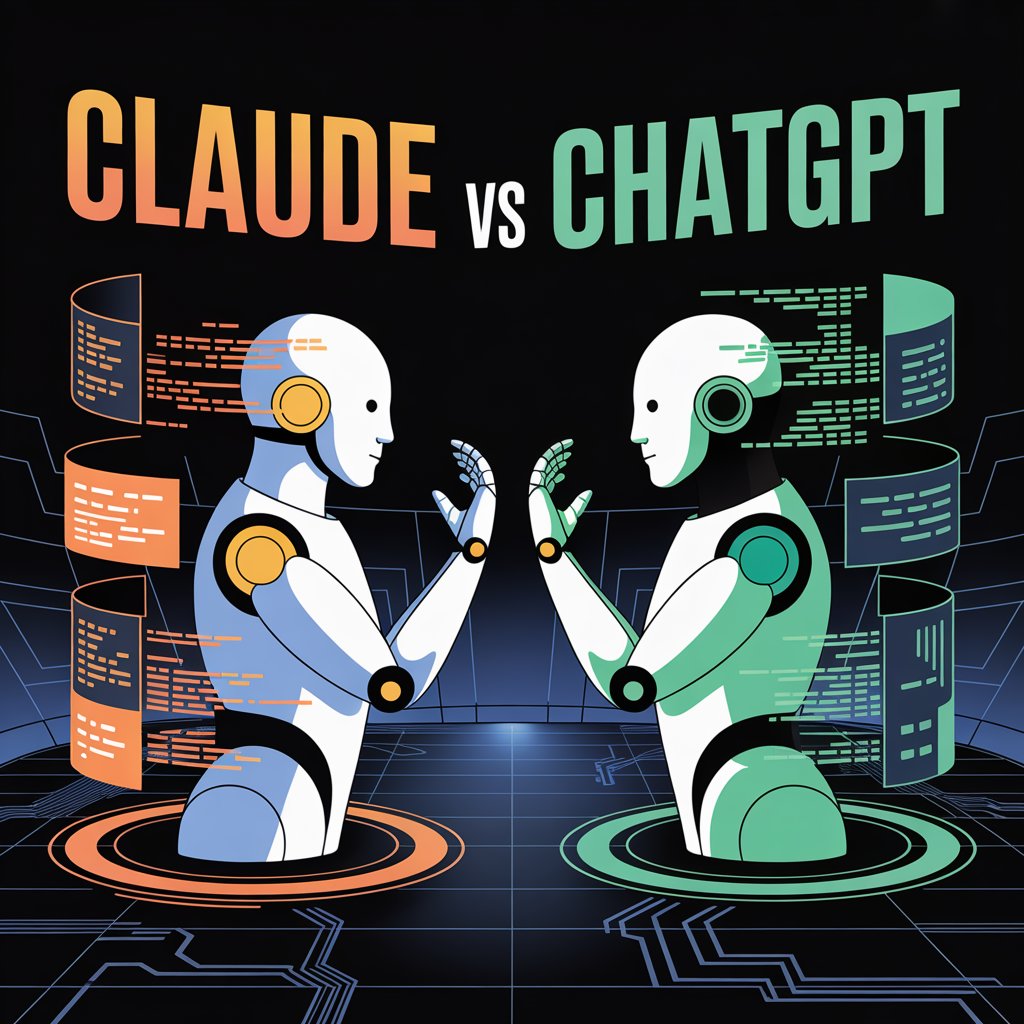
In 2026, evaluating object-counting accuracy seems less important due to numerous model changes and the availability of game-changing agentic capabilities. The flagship models from Anthropic and OpenAI are nearly equal, with a few exceptions. This means that in order to compare them effectively, I should pay more attention to the features and specific use Claude VS ChatGPT cases that set each program apart rather than the underlying power.
For this head-to-head comparison, I put each tool through its paces after spending hundreds of hours using it. With an emphasis on the most recent models, such as Claude Opus 4.7 and ChatGPT’s GPT-5.5, I’ll help you understand what makes Claude vs ChatGPT unique based on all that testing so you can select the tool that best suits your workflow.
Tech writers, including myself, got fixated on pushing the boundaries of ChatGPT once OpenAI released it in late 2022. Is it capable of writing poetry? Code for debugging? Tell a five-year-old about quantum physics. The emphasis turned to head-to-head task comparisons (such as counting objects or resolving ethical issues) in an attempt to determine which model was more capable after Anthropic’s Claude joined the scene a few months later.
Claude vs ChatGPT at a Glance
Claude vs ChatGPT are powered by similarly capable LLMs and LMMs. They differ in some important ways, though:
For those looking for a comprehensive AI toolbox, ChatGPT is the best option. It is perfect for people who wish to study the entire range of what AI is capable of, from its image production capabilities to its browser-based agentic automation.
Claude works well for users who are interested in complex creative work and coding. It is the ideal option for developers, authors, and analysts who choose depth over breadth because of its more organic writing style, potent agentic coding tools, and careful analytical approach.
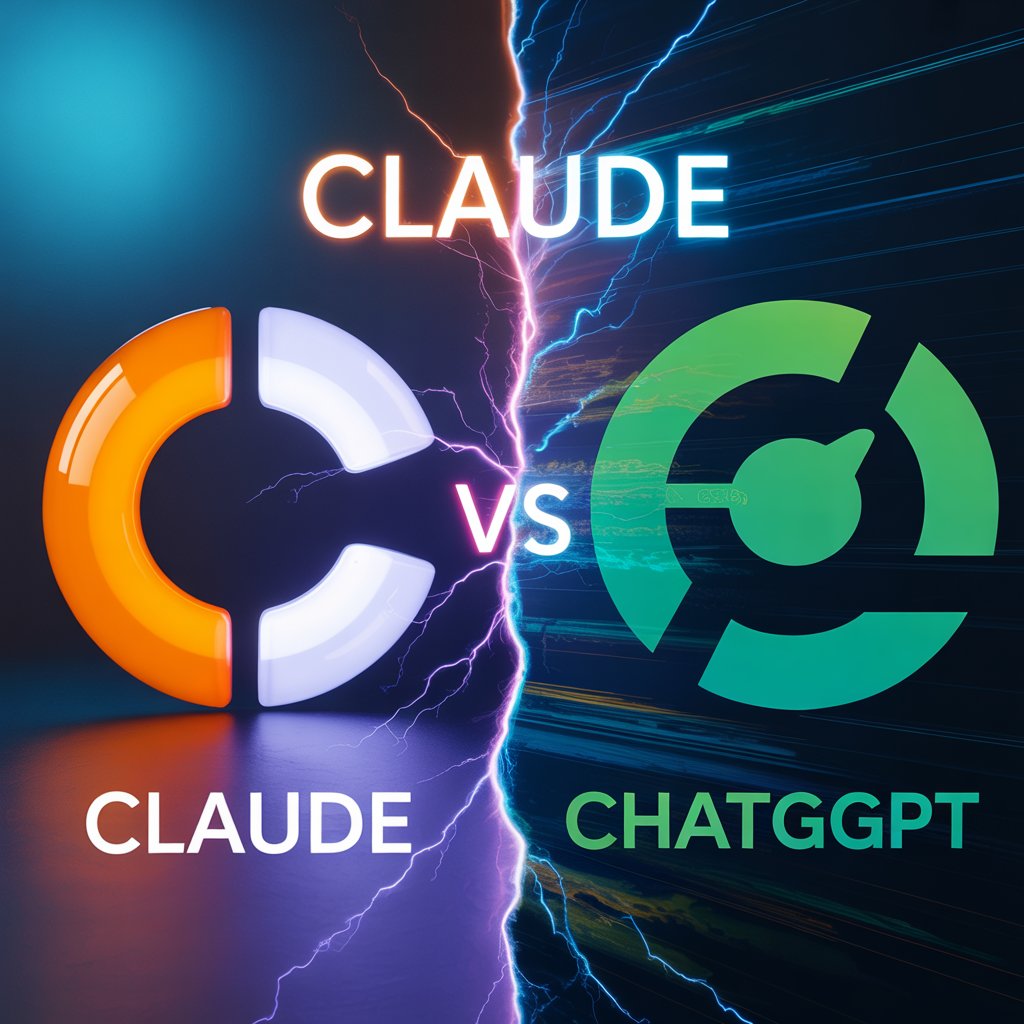
Remember that you might want access to both tools if you utilize AI a lot, especially since you’ll probably run into usage constraints. For instance, even though I like to communicate with Claude, I usually utilize ChatGPT to analyze a lot of data in order to stay under Claude’s usage constraints.
Both Anthropic and OpenAI have flagship models that are state-of-the-art, models tailored to certain use cases, and older models that are slower and less sophisticated.
Both apps are ridiculously easy to use and offer state-of-the-art models
Given that you’re interacting with the state-of-the-art AI technology behind the scenes, it’s amazing how approachable the entire process is when utilizing ChatGPT or Claude. The user experience is no more difficult than searching for a recipe on Google, yet both apps are powered by cutting-edge models that can handle almost anything you throw at them.
Claude’s interface is particularly simple because of its narrow range of capabilities, which include a prompt box, dropdown menus for choosing your AI model and writing style, and the ability to connect files and images.
Because ChatGPT has more functions than Claude, when you open the side panel, it becomes a little more congested. At least on the home screen, everything else is essentially the same.
Just be aware that, in contrast to Claude, ChatGPT automatically chooses a model based on your query by default (though you may proactively define the model if you like). This is probably a benefit for casual users because it’s one less item to worry about. However, if you’re a more seasoned user, you may unintentionally run a model that isn’t as capable as you anticipated.
What is the actual experience of using each app? The majority of us have used ChatGPT, Claude, or both for common questions like drafting letters, asking how often to water succulents, and posting pictures of strange rashes to see whether we can just slap on some hydrocortisone and call it a day. I’ll skip the boilerplate stuff here. Either tool will work well for this kind of inquiry.
User experience is now the true differentiator, and Claude usually has the advantage in this regard. Claude’s small UX additions always make my life easier, and I’m often delighted and surprised by them. I’ll give you a few instances.
Claude is a better partner for creative work
Evaluating artistic work is subjective, in contrast to arithmetic or related activities where your output is either correct or incorrect. In my opinion, Claude produces excellent work for writing assignments and as a creative collaborator in general. Although OpenAI’s GPT-5 series of models are an improvement over the GPT-4 series, they still have a tendency to sound more generic than Claude Sonnet 4.6.
In my opinion, GPT-5.5 far outperforms previous ChatGPT models in terms of writing, especially when it comes to minimizing the kind of boilerplate, over-formatted, aggressively-bulleted ChatGPT output that has made its way into business emails and Reddit postings. GPT-5.5 (especially the Thinking version of the model) is your best option if you plan to use ChatGPT to produce textual content.
However, ChatGPT still doesn’t feel like a companion. It doesn’t think very strategically or present a range of possibilities on its own; instead, it completes tasks dependent on your prompt. Claude does. Additionally, Claude’s more collaborative approach frequently produces greater creative results because it takes a lot of back-and-forth iteration to obtain solid content from an LLM.
Experience
Claude is an AI chatbot that can help you in many different ways. I have personally used this AI tool for research, creativity, art, automation, and many other tasks.
Using this AI tool, I researched my client’s business, built strategies for it, and then automated many parts of the business with the help of AI. After delivering the project, my client was very happy and satisfied with the results.
My recommendation to everyone is to use AI for finding clients and then use it according to the client’s needs to build and grow their business more effectively.
ChatGPT can be used to generate images
Images can be created right within the ChatGPT interface. It is one of the most potent AI picture producers out there, powered by GPT picture 2.
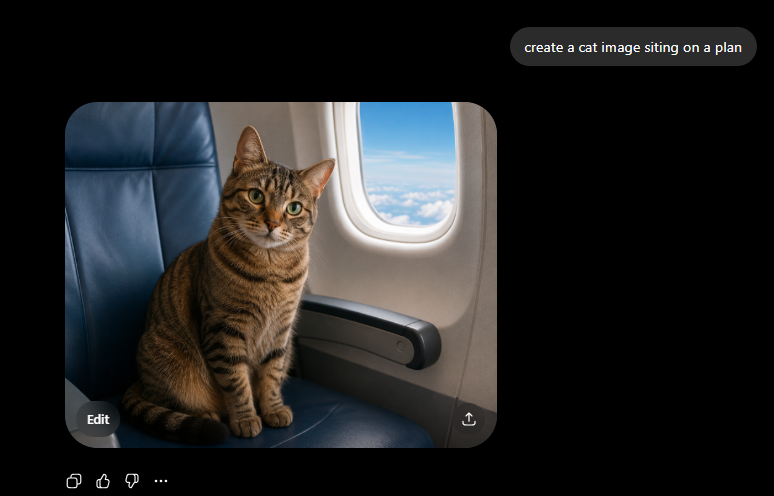
There isn’t much else to say; ChatGPT is superior to Claude if you want to create photos. If not, you’ll have to include an additional AI picture generator in your stack.
Claude Code has become the coding tool of choice for developers
The speed at which Claude has taken over the enterprise API and agentic coding markets cannot be overstated.
Take a look at these charts, particularly the one in the center that illustrates the evolution of enterprise LLM usage.
Even non-programmers can now produce software of production quality since Claude Code is sufficiently simple to prompt using plain language. To begin developing, simply download Claude’s desktop application (or utilize the Claude Code web program).
Codex, an agentic coding tool that is largely comparable to Claude Code, is OpenAI’s response to all of this. Codex offers a few intriguing features in addition to increasing developer productivity, such as reusable automation routines stored as portable files and mid-task steering (the ability to reroute an active build without restarting). Codex is available to anyone with a ChatGPT Plus plan or higher.
Both apps now offer agentic AI features
The era of agentic coding has already arrived. Agentic capabilities for everything else come next. Both Claude vs ChatGPT already have solutions that assist with non-coding tasks, such as scheduling a dental visit or organizing files.
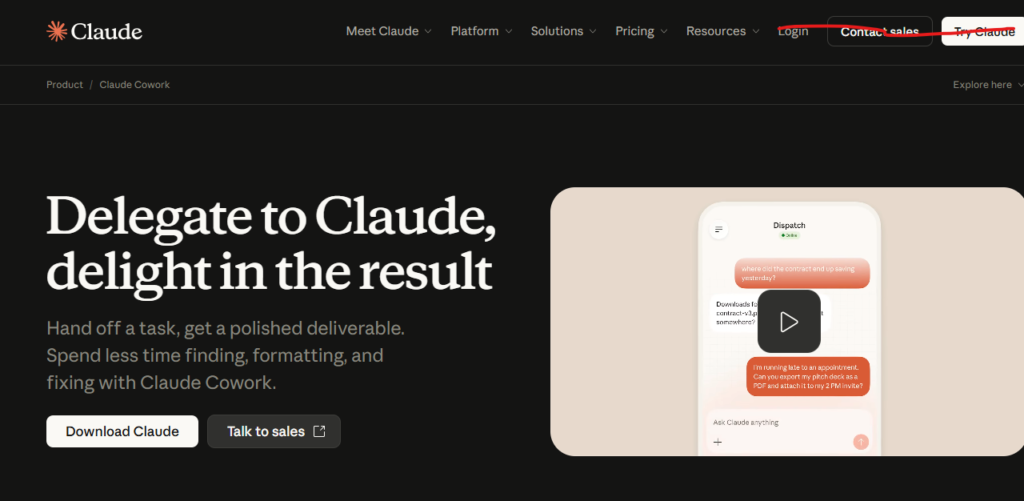
Cowork is the name of Claude’s agentic product, which is available through his desktop application for Windows and macOS. It operates directly on your file system: you point it in the direction of a folder, specify the desired result, and allow Claude to outline and carry out particular actions. Cowork, for instance, may gather information from a folder containing numerous PDFs and arrange them in a spreadsheet.
The ChatGPT agent is online. The ChatGPT agent uses a virtual browser to explore websites, complete forms, click buttons, and do tasks on your behalf instead of interacting with your computer’s file system. Online chores like data scraping, research, and travel booking are better suited for it. Click the + menu and choose Agent mode to utilize it.
ChatGPT has some extra bells and whistles
I’ve already argued that ChatGPT is a more feature-rich and adaptable tool. While some of those capabilities, such as workspace agents, are helpful for experts, they aren’t really revolutionary for average users. However, ChatGPT can be made much more useful for daily use with the following capabilities.
Tasks
You may wonder why you would use ChatGPT for task management if, like me, you already have a task app that keeps track of your to-do list. However, after some experimentation, I understand that incorporating AI offers up new possibilities for some applications.
Claude vs ChatGPT: Which is right for you?
In these situations, I prefer to have a strong viewpoint, but Claude vs ChatGPT are so similar that it really comes down to personal preference.
If you’re looking for an AI tool to help you with creative tasks like writing, coding, or brainstorming, pick Claude. It is increasingly difficult to overlook Claude’s coding advantage in particular: Cowork is using the same agentic logic for non-coding tasks, and Claude Code is currently the most widely used agentic coding tool among professional developers and businesses.
If you want a multifunctional tool, go with ChatGPT. Not only can you generate text, but you can also develop shared agents, generate graphics, or connect to specially designed GPTs that have been taught for specialized tasks like academic research. Because of its extensive feature set and browser-based agentic automation, ChatGPT is ideal for both solo and group users who wish to investigate the entire range of AI.
Consider utilizing both if you have several reasons to apply AI in your business, particularly in light of usage restrictions and various pricing levels for particular use cases. For instance, you could utilize ChatGPT for fast searches, picture creation, and web-native agentic tasks, and Claude for complex writing and coding projects.
AI Tool Spots is a technology-focused platform dedicated to sharing the latest updates in Artificial Intelligence, software tools, automation, SEO, and digital innovation. We publish informative guides, honest reviews, tech tutorials, and valuable resources to help bloggers, entrepreneurs, marketers, and tech enthusiasts stay ahead in the digital world. Learn more at aitoolspots.com.