ChatGPT vs Gemini are two names that frequently come up when you’re deciding between AI solutions. Google’s Gemini pulls from Search and plugs straight into Workspace, while ChatGPT offers conversational AI along with a sophisticated ecosystem of developer tools and bespoke GPTs. They are addressing many of the same issues from various perspectives in order to make AI practical for daily tasks. Let’s examine what each offers so you can determine which best suits your requirements.
What Is Gemini?
Google’s main AI model family, Gemini, is designed to process text, pictures, and video all in one system. It was created by Google DeepMind and instead of switching between specialized modules, it processes various forms of content simultaneously. You can enter a video and receive a timestamped summary, or you can show it a flowchart and ask for the code. all at once.
What Is ChatGPT?
ChatGPT is OpenAI’s conversational AI, designed to generate coherent, contextually aware responses across a wide range of topics. It’s known for text that sounds natural and approachable, whether you’re explaining technical concepts, drafting reports, or brainstorming ideas. The architecture keeps track of conversational context well, so extended back-and-forth feels smooth and logical.
The Big Differences Between ChatGPT vs Gemini
Although their training strategies, ecosystem focus, and access mechanisms are different, both models mark significant advancements in generative AI. While ChatGPT vs Gemini developed from text-first to fully multimodal over the course of several generations, Gemini was intended to be a multimodal system from the start. These variations have an impact on how each tool completes tasks and integrates into your workflow.
Model architecture and design philosophy
Let’s start with the fundamental design differences that shape how these models operate.
From the beginning, Gemini’s architecture treats text, graphics, and video as equal inputs. It can reason across various content formats without switching components thanks to its natural multimodal nature. Real-time, cross-platform capabilities is highlighted by the interaction with Google Search, Docs, and Workspace.
Performance strengths
Capabilities are determined by architecture, but real-world performance shows where each model really shines. This is where the design decisions we just covered result in useful benefits.
Particularly with Gemini 3 Pro’s extended context window and Deep Research features, Gemini excels at reasoning tasks, mathematical problem-solving, and multimodal interpretation. It distinguishes out for its capacity to extract information from images, such as creating code from schematics or deciphering intricate charts. It can obtain current information thanks to the interface with Google Search, which is useful when you require the most recent information.
Accessibility and cost
Beyond performance, whether or not these models match your workflow really depends on how you access them and how much you pay for them.
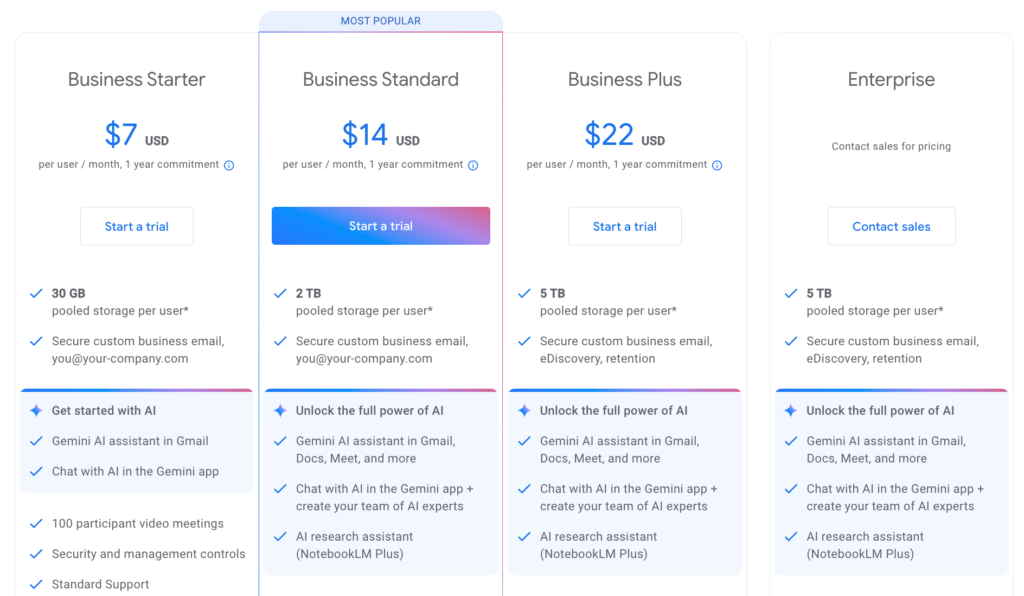
Gemini can be accessed through Google products, mobile apps, and the web. Faster models, such as Gemini 2.5 Flash, are the main source of power for the limited free tier. Gemini Advanced, a component of the $19.99/month Google AI Pro subscription, offers advanced capability along with priority access to Gemini 3 Pro, a one-million token context window, Deep Research, Gemini Live, and two terabytes of storage.
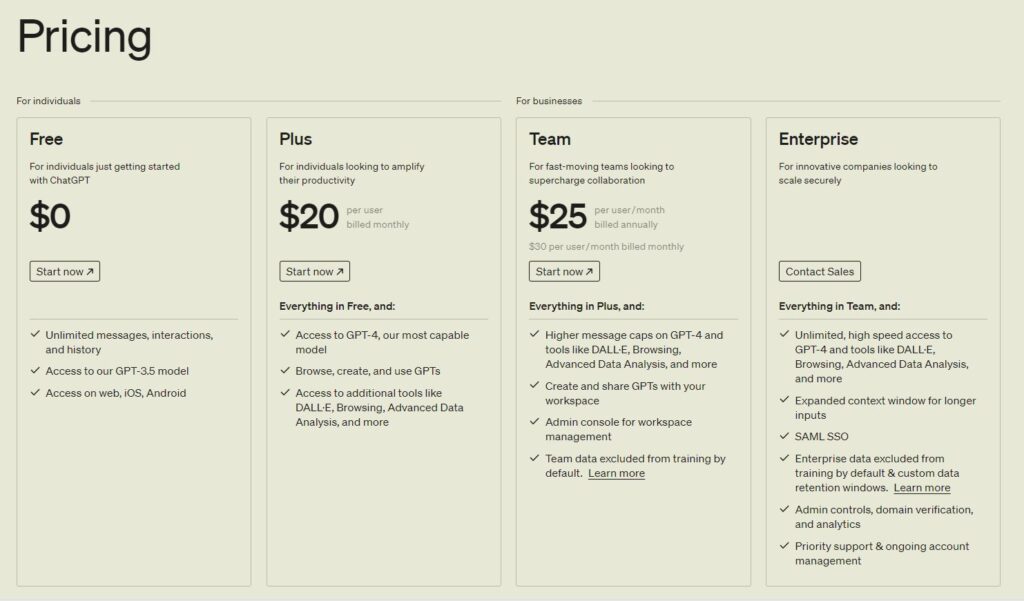
ChatGPT operates on a freemium business model. In addition to limited access to features like Browse, data analysis, and custom GPTs, the free tier has GPT-4o message restrictions. Higher restrictions and access to more sophisticated models like GPT-5.1 are provided via paid tiers (Plus at $20/month, Pro, Business, and Enterprise). Pay-per-use pricing for the OpenAI API increases with tool usage and volume.
ChatGPT vs Gemini: Feature-by-Feature Comparison
After discussing the fundamental distinctions between architecture and access, let’s go hands-on. What is the true performance of these models when applied to certain tasks?
Writing and communication
For essays, papers, and tutorials, ChatGPT produces content that is conversational and seems natural. With a variety of phrase constructions that don’t sound formulaic, its writing style is typically smooth and captivating. This makes it useful in situations when readability and tone are just as important as accuracy.
Gemini responds with more succinct, fact-based answers. Technical reports, corporate summaries, and professional documentation all benefit from its slightly formal and data-centric writing style. ChatGPT typically produces more varied and captivating results for creative storytelling or marketing copy. Gemini’s accuracy might be useful for simple, information-rich content.
Coding and technical queries
ChatGPT’s inherent multimodal features, data analysis tools, and code execution provide deep interaction with development workflows. It works well for learning code since it generates annotated examples, walks through debugging stages, and explains syntax. When investigating APIs or attempting to comprehend how a library functions, the conversational format is beneficial.
Gemini’s coding skills excel in mathematical modeling and organized problem-solving, particularly in Google Cloud and Vertex AI environments where Gemini 3 Pro can manage big codebases and long-context reasoning. If you’re already in that setting, its interaction with Google Colab and Workspace tools makes it handy. Developers have more control over deployment thanks to ChatGPT’s wider API use and continued flexibility across various IDEs and development configurations.
Creativity and ideation
Open-ended brainstorming is where ChatGPT shines. It works well for coming up with ideas for stories, marketing strategies, lesson plans, and hypothetical situations. The model is a great option when you’re searching for creative inspiration because it may elaborate on ambiguous cues and generate a variety of inventive outputs.
Gemini’s inventiveness is more methodical and based on veracity. For presentation decks, product summaries, or technical design proposals, it produces concepts that feel clear and structured. Gemini offers targeted, data-backed innovation with less emphasis on stylistic variety, whereas ChatGPT offers broad, exploratory thinking.
Learning and research applications
For interactive tutoring, ChatGPT excels. It adjusts to your comprehension level and breaks down difficult ideas with step-by-step explanations. This makes it useful for learning new technical subjects, getting ready for tests, or making sense of unclear information.
Gemini provides research-focused results with citation-style summaries and references to online sources, supported by Google Search integration and features like Deep Research in Gemini Advanced. It’s helpful when you wish to investigate scholarly or technical sources or need up-to-date, fact-checked material. ChatGPT facilitates deep conceptual understanding. Gemini facilitates speedy information retrieval and verification.
Cost, efficiency, and data privacy
While Pro, Business, and Enterprise tiers add more liberal limitations and admin controls, ChatGPT Plus offers higher limits on GPT-4o and access to advanced models like GPT-5.1 for a set monthly subscription. OpenAI’s API pricing for developers increases with tool calls and usage, which can be costly for high-volume applications.
Gemini Advanced combines cloud storage and Workspace integrations with AI capabilities (Gemini Advanced, Deep Research, Gemini Live, Veo) through the Google AI Pro subscription. This can be economical for teams that already pay for Google Workspace and Google One storage. Both provide options where customer data isn’t utilized for training in business strategies and disclose enterprise data privacy promises.
Which AI Model Should You Use?
Keeping all of these things in mind, let’s turn what we’ve discussed into useful advice. Which tool works best for you will depend on your particular circumstances.
For developers and technical users
Gemini is useful for math-intensive queries, systematic problem-solving, and integrated coding with Vertex AI and Google Colab. Gemini’s close integration can facilitate development if Google Cloud and Workspace technologies are the main components of your workflow.
For learning code, investigating APIs, and producing annotated examples in a variety of settings, ChatGPT is superior. For the majority of developers creating custom apps or experimenting with new libraries, it is the better option due to its flexibility, rich API, and robust coding performance.
For businesses and general users
Gemini is a natural fit for Google Workspace teams. If you are already managing projects within Google’s ecosystem, there is less friction because it interacts seamlessly with Docs, Sheets, Gmail, and Slides.
With robust document creation, bespoke GPTs, and API connectors, ChatGPT provides more creative and analytical capabilities. It works well for teams that require flexible AI support for a variety of tasks, from internal knowledge management to content production, thanks to its conversational interface and GPT Store.
For privacy-conscious and enterprise users
With versions designed for Google Workspace and Google Cloud that complement current Google governance procedures, Gemini takes use of Google’s enterprise-level compliance.
Through OpenAI’s rules and enterprise services (Business and Enterprise), which enable admin controls, SSO, and data isolation, ChatGPT upholds strict privacy requirements. Both satisfy basic enterprise data handling needs, but if your stack is tool-agnostic, ChatGPT may be more natural, whereas Gemini may integrate more easily if you’re standardized on Google Workspace.
Conclusion
Google’s integrated, search-informed model and OpenAI’s adaptable, tool-rich conversational system are two different approaches to AI that are represented by ChatGPT vs Gemini. Your decision should take into account your use case, ecosystem, and level of comfort with technical tools. Gemini is a perfect solution for Google Workspace users who require strong connectivity with Docs, Sheets, and Gmail in addition to real-time, multimodal reasoning.
For the majority of users, ChatGPT is still the better choice if you want quality writing, creative flexibility, and a sophisticated ecosystem of tools and bespoke GPTs. Gemini 3 is the best model if you want to choose the model that does the best on the tests and are impressed by the high scores.
AI Tool Spots is a technology-focused platform dedicated to sharing the latest updates in Artificial Intelligence, software tools, automation, SEO, and digital innovation. We publish informative guides, honest reviews, tech tutorials, and valuable resources to help bloggers, entrepreneurs, marketers, and tech enthusiasts stay ahead in the digital world. Learn more at aitoolspots.com.